What Makes MAMC Special Compared to Other Colleges?
Is it the infrastructure, food, contacts, or just the fact that it’s located in Delhi?
Well, there's a saying: “It’s the patients that make up a hospital.”
The simple answer: the patient load. Government hospitals here offer an unmatched opportunity to train and learn essential clinical skills. It’s analogous to training AI with large datasets — the more you see, the more you learn. Exposure to varied presentations, signs, and the subtle art of history-taking is invaluable at the undergraduate level.
Hospitals like Lok Nayak Hospital (LNH) and GB Pant provide a diverse spectrum of patients — a fertile ground to cultivate both clinical knowledge and bedside skills.
Current scenario: A shift in Priorities
Many students today try to escape clinical postings. Instead, they rely on online videos, offline coaching, and rarely on textbooks! Reasons for this are simple: the exhaustive syllabus, misguidance from seniors (who were themselves misguided by their seniors), peer pressure, and the deteriorating quality of medical education in some colleges. (Ref)
This trend has led to poor clinical understanding and widespread absenteeism during postings. Even those who are genuinely interested face hurdles — residents unwilling or unable to teach, time constraints, and lack of peer support.
But not all hope is lost.
There are still residents and consultants who love to teach and take time for demonstrations. Many departments have approachable mentors — the key is simple: where there’s a will, there’s a way.
Patients: The Best Teachers
Each patient tells a story.
They travel long distances, often from small towns and villages, to seek care. One of my friend’s relatives came all the way from a remote village in MP just to receive IV immunoglobulin for Guillain-Barré Syndrome — a treatment that costs lakhs, showcasing the financial burden illness places on the average Indian.
When a patient walks into the OPD, their gait, body language, and even silence can tell you a lot — from neurological conditions to psychiatric illnesses. I once witnessed a case of suicide attempt by an overdose of 40 metformin tablets. These encounters go beyond textbook learning.
The way the resident or consultant takes history teaches the art of handling the varied language used by the patient, converting it into plausible history and then reaching a diagnosis. During our Neurology posting, a consultant would ask a child about their favorite subject or request an artist to bring a drawing on their next visit. A mobile repairman was asked about the cost of different phones. These conversations might not help the diagnosis directly, but they bring comfort to patients who’ve waited hours to be seen. They teach us to treat not just the disease, but the human being. Learning to decode patient words into history and then asking the relevant questions from our side is the art of history-taking.
The Importance of Clinical Examination
There is so much to learn, starting from the basics. I've palpated a rare trochlear lymph node during Ortho posting, observed the tremors of Parkinson’s, diagnosed alexia without agraphia, appreciated the facies of Down syndrome, and listened to the pansystolic murmur of VSD in Pediatrics. It’s not about chasing rare cases — it’s about paying attention to what’s right in front of you.
You can't learn to swim by reading a manual; you need to jump into the river. Similarly, to learn clinical medicine, you must enter the wards. Even common cases like CLD offer rich opportunities to elicit signs and correlate with pathophysiology. Post-emergency days bring a variety of new admissions to the wards, each one a live case study.
What you read or watch in coaching apps must be seen and experienced in real life. Clinical exposure teaches you how to take a proper history, perform examinations, and reach a diagnosis — all under pressure, while also learning empathy and time management. It’s an all-round experience that no amount of studying in your room can ever replace. Although there are many known resources, some are rare known which are:
Some lesser-known but excellent resources include:
- Sapira's Art and Science of Bedside Diagnosis – A beautifully written book that teaches bedside skills through storytelling.
- Practical Guidelines of Fluid Therapy by Sanjay Pandya – An extremely useful guide on IV fluids, electrolyte disturbances, and acid-base disorders, often encountered in Medicine and Surgery.
- ONOS (Open National Online System) – A free resource provided by the Indian government offering access to journals (like Nature) and podcasts for passive learning. If you do not feel like reading, you can access some podcasts/lecture audios which is a very exhaustive way to learn.
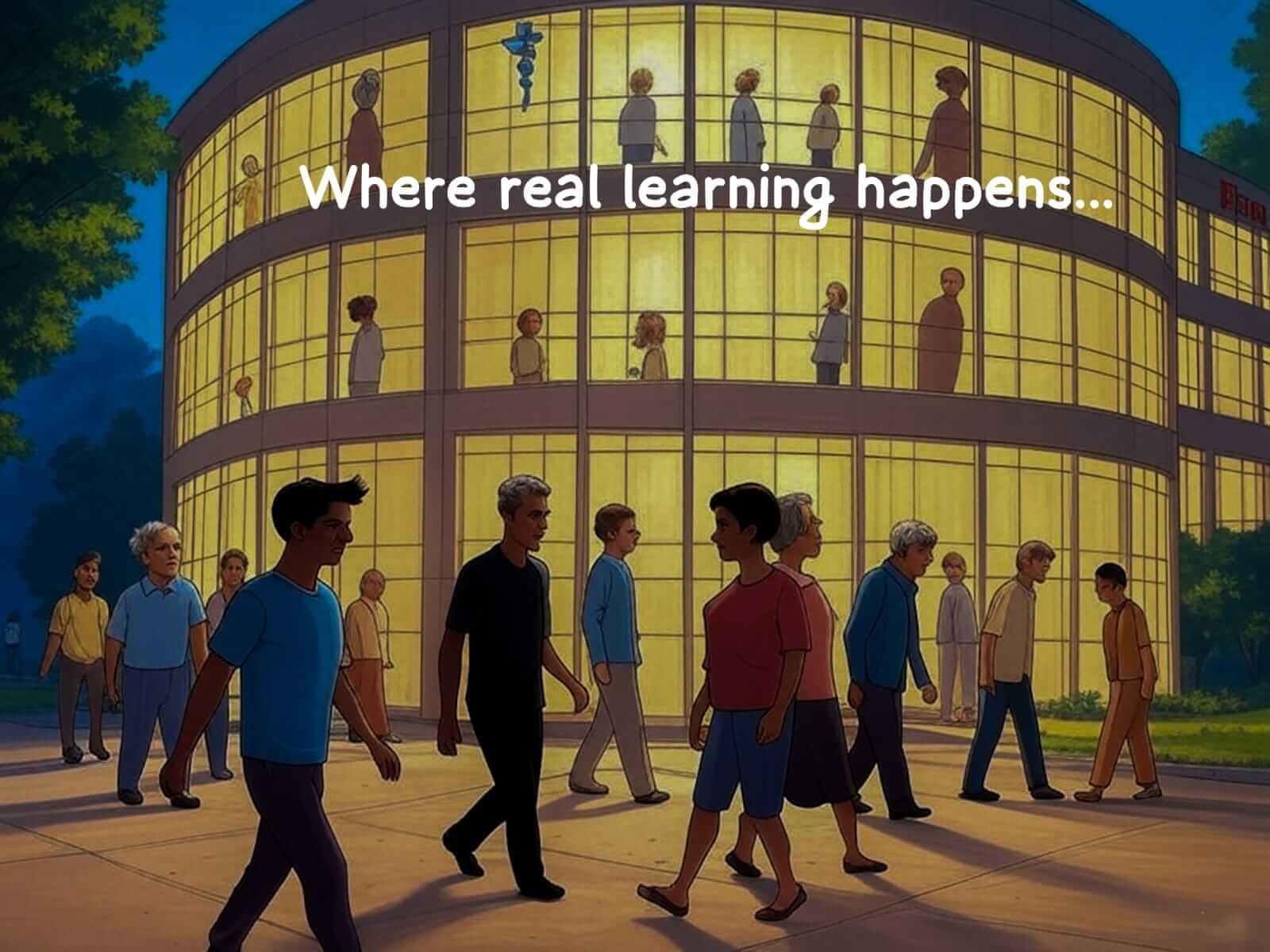
At the end of the day, talk about cases and clinical signs with your friends — hype up real learning. Let your flex be the clinical stuff you saw and did in the wards, not just how many coaching lectures you’ve ticked off.
FAQ
What is MAMC?
MAMC stands for Maulana Azad Medical College. It is a prestigious government medical college located in Delhi, India. Known for its high patient load and excellent clinical exposure, MAMC is affiliated with top hospitals like Lok Nayak Hospital and GB Pant Hospital, offering students hands-on learning opportunities from the very beginning.